Want to be in the loop?
subscribe to
our notification
Business News
REAL ESTATE MARKET: SPECULATORS EMERGED
Market Bustling
Since late 2014, the real estate market has been maintaining a stable growth rate. According to statistics of CBRE Group, the world's largest commercial real estate services firm, in the third quarter alone, Hanoi market had about 9,160 newly offered apartments from 26 projects (a two-fold year-on-year increase).
Similarly, Ho Chi Minh City market also welcomed 10,100 apartments from 26 projects (a nearly three-time increase year on year).
In September alone, Hanoi market recorded 1,600 successful transactions, an increase of nearly 40 percent year on year. Generally in the third quarter, the number of successful transactions in Hanoi reached 5,300, higher than the total figure of 2014 and a 70 percent increase year on year.
The FDI inflow to the real estate sector in the first nine months also swelled with total registered capital rose 53.4 percent, disbursements up 8.4 percent year on year. All foreign investors are out hunting potential real estate businesses to partner up, invest fund and develop projects.
According to Mr Nguyen Tran Nam, Chairman of Vietnam Real Estate Association, in the first nine months, about 30,000 real estate transactions had been made, equivalent to the total figure of 2014. Fuelled by a hike in both supply and the number of transaction, average apartment prices continued to climb, with an increase of 5- 7 percent year on year.
Mr Nguyen Ngoc Thanh, Deputy Chairman of Vietnam Real Estate Association, said that market information mainly came from investors and suppliers, thus it’s necessary to look at real demand in the market, to see whether the demand-supply relationship had struck a stable balance.
The current supply-demand relationship showed that supply was plentiful while demand was limited, issues like price differences was in fact not being driven by the supply - demand relationship, but a result of the solution or sales policy of investors.
Also according to Mr Thanh, in the affordable housing segment, the demand was huge but the supply was sporadic and limited, unable to meet the social demand.
A “bubble” risk?
Positive signs of the real estate market, although subtle, have attracted investors’ attention, reflected in the return of real estate speculators. Currently, in some real estate projects in beautiful locations and of reputable investors, in order to buy houses, many people have to spend sums with considerable differences.
Brokerage firms speculate by acquiring one or multiple floors of projects garnering interest, thus indirectly forcing buyers to go through the broker if they want to buy a house in the project. In some cases, purchasing through a broker means the price is pushed up more than VND200 million per unit.
Along with big differences, investors also play an active hand in pushing prices. An employee at EZ Vietnam real estate trading floor, the dealer of the New Horizon City project, at 87 Linh Nam street, Hoang Mai district, said that apartments in the two building N01 and HH1 of this project were receiving great interest and prices could double in just a few days.
Notably, apartments in the luxury segment – the segment that had a “freeze” the market during the recent crisis – have come back to claim high proportion of apartments opening sale. In the third quarter alone, Hanoi market had about 2,900 apartments opening for sale, accounting for 32 percent of new openings.
For the first 9 months, the number of apartments offered for sale took up 25 percent of the apartments opening for sale.
The recovery of the property market can be seen concentrating more on the medium and high-end segments, whereas sluggish in the affordable segment.
Concessional lending package of VND30 trillion for the low-income only disbursed 26 percent (as of September), while the real estate lending rate has been showing signs of “heating up”, far exceeding the growth rate of the nominal GDP. This poses the risk of inflation and asset bubbles in the later stages.
Discussing this issue, Mr Nguyen Van Duc, Deputy Chairman of the Ho Chi Minh City Real Estate Association, said that the Ho Chi Minh City market was showing unusual signs when lively in the luxury segment (approximately VND2- 3 billion/unit), while the segment below VND1 billion was quiet.
“The projects under VND1 billion/unit were launched in late 2014 and early 2015, but made no appearance in late 2015. It’s unusual; this segment should have been promoted much more because it fits with the purchasing power and the demand of people. This is what makes me cautious about the risk of another real estate bubble burst like the one happened during the 2007- 2009 period,” said Mr Duc.
Source: VCCI
Related News

INFRASTRUCTURE / CONSTRUCTION / LOGISTIC / PORT
VIỆT NAM-CAMBODIA TRADE GATHERS PACE TOWARDS $20 BILLION TARGET
Trade between Việt Nam and Cambodia continues to grow, remaining a bright spot and a key pillar of bilateral cooperation as the two countries aim to raise two-way trade to US$20 billion in the coming years. After setting a record of more than $11.3 billion last year, bilateral trade reached about $8.7 billion in the first eight months of this year, up 8.3 per cent year on year.
TECHNOLOGY
AI BEGINNING TO RESHAPE RECRUITMENT CRITERIA
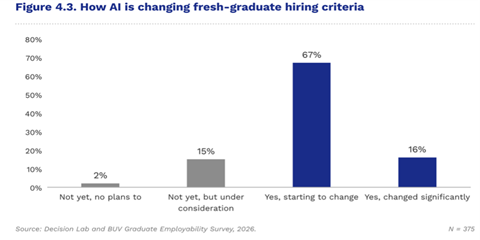
Digital literacy is the only capability area in which fresh graduates meet employers’ expectations, according to a new report. Yet, it is also the standard rising fastest, as businesses increasingly expect new hires to use AI effectively in the workplace. Some 83 per cent of employers say AI has changed, or is beginning to change, their hiring criteria, while 94 per cent report higher expectations for digital and AI capabilities than they had two to three years ago.
INFRASTRUCTURE / CONSTRUCTION / LOGISTIC / PORT
ĐÀ NẴNG GREEN-LIGHTS US$105 MILLION THAI DEVELOPMENT DEAL
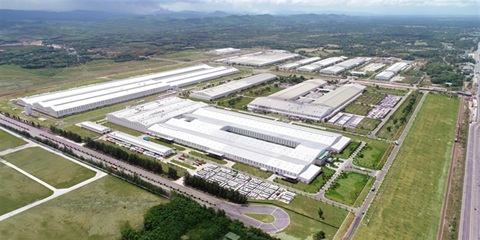
The central city has approved an investment proposal by Thailand’s WHA Group to develop infrastructure for the 400ha WHA Đà Nẵng Industrial Park project on two communes of Thăng Bình and Đồng Dương, with an investment of more than VNĐ2.7 trillion (US$105 million). The city said it approved WHA Industrial Development International's status as an investor in the project, which is expected to take place between 2027 and 2034.
VIETNAM ECONOMY INVESTMENT
MOBILE PHONE EXPORTS RISE 20% TO $51.8 BILLION IN FIRST NINE MONTHS
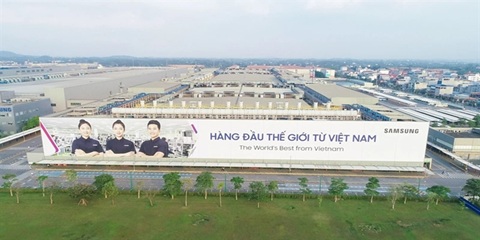
Exports of mobile phones and components rose 20 per cent year-on-year to nearly US$51.8 billion in the first nine months of 2026, with China, the US and Republic of Korea accounting for more than half of the total. Shipments to the three markets reached a combined $26.18 billion, or 50.6 per cent of total exports of the product group during the period, according to data from the Vietnam Department of Customs under the Ministry of Finance.
VIETNAM ECONOMY INVESTMENT
FRUIT AND VEGETABLE EXPORTS POISED TO HIT $10 BILLION IN 2026
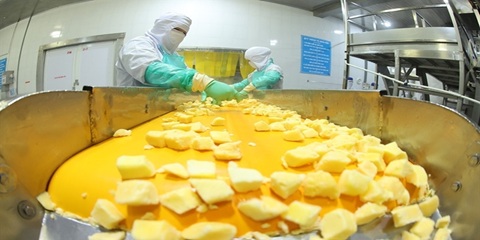
Fruit and vegetable exports are on track to reach nearly US$10 billion in 2026, after rising 19.9 per cent year on year to nearly US$7.4 billion in the first nine months, driven by strong seasonal demand and abundant tropical fruit supplies. The Ministry of Agriculture and Environment said the growth reflected stronger international demand for fresh produce and processed agricultural products.
GARMENT / TEXTILE
TEXTILE EXPORTS FACE DUAL CHALLENGES OF SUSTAINING ORDERS AND BOOSTING EFFICIENCY AMID GROWING COMPETITION
Data shows that the textile and garment sector maintained its growth momentum in the first nine months of this year. The industry's total export turnover reached an estimated US$35.721 billion in the first nine months of this year, up 3.3 per cent year-on-year. Despite posting encouraging export figures, Vietnamese textile and garment enterprises continue to navigate unpredictable market variables.
Events Sponsors






















